

Logistics Software Development
We design logistics platforms, fleet management software, warehouse systems and supply chain solutions engineered for real-time operations and long-term scalability.
- Fleet Management
- Real-time Tracking
- Warehouse Systems
- Cloud Native
- Route Optimisation
- Estimated timeline
- Typically 8–14 weeks for a first platform module, longer for full fleet and warehouse rollouts
- Platforms
- Web · Mobile · Cloud
- Tech stack
- React · Laravel · PostgreSQL · Google Maps
Logistics Overview
We design logistics platforms, fleet management software, warehouse systems and supply chain solutions engineered for real-time operations and long-term scalability.
- Real-time Operations
Live tracking and operational visibility.
- Scalable Logistics
Architecture built for thousands of shipments.
- Reliable Integrations
ERP, GPS, warehouse and carrier integrations.

Everything under one roof
Everything included in this engagement, from architecture to long-term support — one team, one system.
Why Logistics Companies Choose Aixo Lab
- Operational Visibility
Real-time tracking and status data are architectural requirements from day one, not a dashboard bolted on afterward.
- Scalable Architecture
Systems designed to handle thousands of concurrent shipments and vehicles, not just the pilot's traffic.
- Reliable Integrations
ERP, GPS, warehouse, and carrier integrations built to keep working as each system on the other end changes.
- Long-term Evolution
A platform your team can extend as operations grow, without a rebuild every time a new region or carrier is added.
Built to stay up when it matters most
The engineering foundation every logistics platform needs — operations don't pause for a deploy or a traffic spike.

High Availability Infrastructure
Horizontal Scalability

Fault-Tolerant Systems

Real-time Data Synchronisation

Disaster Recovery

Proactive Monitoring
The platform capabilities every logistics operation needs
Capabilities built into the platform from the start, not bolted on after the first warehouse goes live.
Built on a modern, production-grade stack
Every technology here is a deliberate choice, not a default.
How we work
The same disciplined process behind every engagement, from the first architecture decision to launch.
- 01Discovery
Understand the business problem and its real constraints.
- Output:
- Scope and goals document
- Your involvement:
- Initial workshop
- 02Product definition

Translate the problem into concrete product requirements.
- Output:
- Feature spec and priorities
- Your involvement:
- Requirements review
- 03UX/UI design
Design user flows and interface before development starts.
- Output:
- Wireframes and design system
- Your involvement:
- Design feedback
- 04Technical architecture
Define system structure, data flow, and technology stack.
- Output:
- Architecture document
- Your involvement:
- Technical review (optional)
- 05Iterative development
Build in short cycles with visible, regular progress.
- Output:
- Regularly shipped working versions
- Your involvement:
- Sprint review participation
- 06Quality assurance
Test functionality, performance, and security before release.
- Output:
- Test results and fixes
- Your involvement:
- Acceptance sign-off
- 07Launch
Deploy to production with a rollback plan in place.
- Output:
- Product deployed to production
- Your involvement:
- Launch approval
- 08Continuous improvement
Monitor, maintain, and evolve the product after launch.
- Output:
- Maintenance and improvement roadmap
- Your involvement:
- Regular check-in meetings
See it in practice
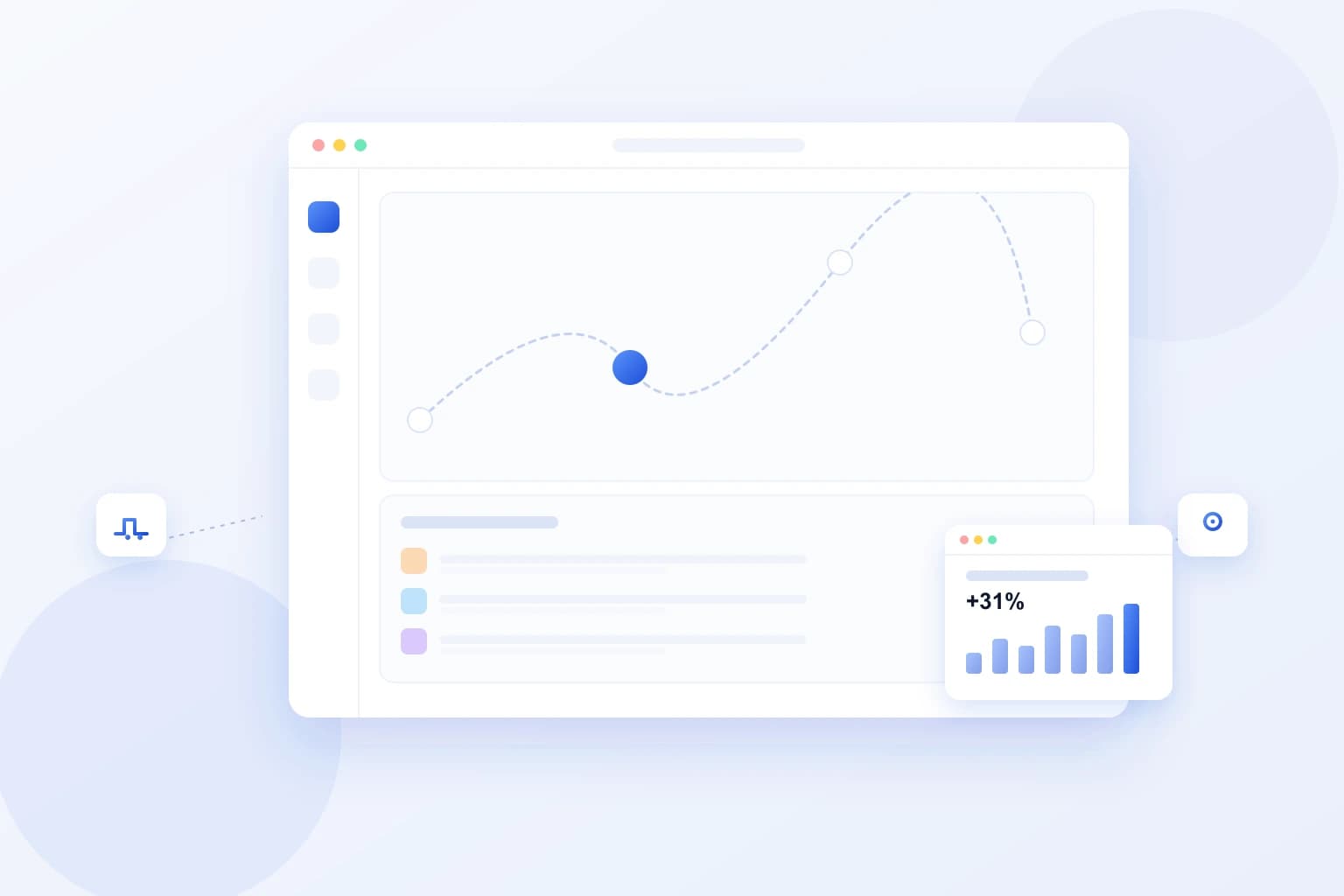
Smart Logistics Hub
A unified cloud logistics platform connecting warehouse management, fleet tracking, dispatch, and customer delivery tracking into one system.
The company managed fleet operations, warehouses and deliveries through disconnected systems with limited visibility.
We developed a unified logistics platform connecting warehouse management, fleet tracking, dispatch operations and customer delivery tracking into a single cloud platform.
Real-time operational visibility
Improved delivery efficiency
Better inventory control
Reduced manual coordination
- React
- Laravel
- PostgreSQL
- Redis
- AWS
- Google Maps
Frequently asked questions
Related reading
Practical guides worth reading while you're scoping this kind of project.
Database Design for Enterprise Applications: A Practical Engineering Guide
Database design for enterprise applications is the discipline of structuring data models, schemas, and infrastructure so a system stays correct, fast, and maintainable as both the application and the organization grow. It covers relational and non-relational modeling, normalization and denormalization trade-offs, indexing and query performance, and the scaling patterns — partitioning, replication, caching — that keep a database healthy at real production load. Good database design is invisible when done well and expensive to fix when done poorly, which is why it deserves the same engineering rigor as any other part of the system.
Read the guideAPI-First Architecture for Enterprise Software
API-first architecture means designing and agreeing on an API's contract before writing the implementation behind it, so every client — web, mobile, partner integrations, AI systems — builds against a stable interface instead of whatever the backend happens to expose. This guide explains how that discipline is actually applied in enterprise systems, not the marketing version of the idea.
Read the guideSaaS Architecture: A Practical Engineering Guide for Enterprise Platforms
SaaS architecture is the set of engineering decisions that let a single codebase and infrastructure serve many customer organizations reliably, securely, and cost-effectively — multi-tenancy strategy, authentication and authorization, billing and subscription systems, and the scalability and security patterns that hold up under real enterprise load. It's not one specific stack or diagram; it's a set of trade-offs a team makes deliberately, based on the product's actual tenant count, compliance requirements, and growth trajectory, rather than copying whatever architecture a well-known SaaS company happens to use.
Read the guideCustom Software Development Cost in Korea
Custom software development in South Korea typically runs from the tens of millions to several hundred million KRW, and the number is driven far more by complexity, integrations, compliance, and team composition than by any single fixed price per feature — this guide breaks down exactly what shapes that number so you can scope a realistic budget before you talk to a vendor.
Read the guideTechnologies we build this on
The stack pieces most relevant to a project like this one.
Node.js Development
We build enterprise backend systems with Node.js — REST APIs, real-time applications, and event-driven microservices architected for concurrency, scalability, and high availability.
Explore the stackRedis Development
We architect Redis into enterprise software as more than a cache — distributed sessions, queues, pub/sub, and rate limiting designed around the actual concurrency and data-loss tolerance a system needs.
Explore the stackREST API Development
We design and build enterprise REST APIs — resource modeling, authentication, versioning, and rate limiting architected as long-term contracts, not endpoints assembled to make one client work.
Explore the stackServices that pair with this work
Other engineering disciplines projects like this one often need alongside it.
Custom Software Development
We design and build custom business software engineered around your operations, not adapted from off-the-shelf products.
Explore the serviceBusiness Automation
Automate repetitive processes, connect disconnected systems and eliminate manual work through intelligent workflows, integrations and AI-powered automation.
Explore the serviceMobile App Development
Aixo Lab designs and builds native iOS, native Android, and cross-platform mobile applications, from architecture through App Store and Play Store release.
Explore the serviceWhat this looks like once built
Reference architectures from our Representative Solutions collection that plausibly apply here.
Purpose-built platforms in this space
Dedicated landing pages for the specific platforms we build most often.
Logistics Software Development Company
Logistics platforms, transportation software, and supply chain solutions built for operational visibility.
See the solutioniOS & Android Mobile App Development Company
Native and cross-platform mobile apps — iOS, Android, and React Native — for startups and enterprises.
See the solutionFor CTOs and technical leadership
Executive-level engagements for organisations planning at a larger scale.
Ready to start your project?
Tell us what you're building — we'll tell you honestly whether we're the right fit.
No sales pressure. Just a direct technical conversation.