

API-First Architecture for Enterprise Software
API-first architecture means designing and agreeing on an API's contract before writing the implementation behind it, so every client — web, mobile, partner integrations, AI systems — builds against a stable interface instead of whatever the backend happens to expose. This guide explains how that discipline is actually applied in enterprise systems, not the marketing version of the idea.
- Engineering-Led
- Enterprise Architecture
- Practical Implementation
- No Generic Tutorials
- Written for Architects
The short version
API-first is a design discipline, not a technology choice. It means an API's contract — its resources, operations, request and response shapes — is designed and agreed on before the implementation behind it is written, so every consumer of that API is building against a stable interface rather than whatever the backend team happened to expose that sprint.
This guide walks through what API-first actually means, how it differs from the more common code-first approach where an API gets bolted onto an existing database schema, why modern products increasingly start with the API rather than the database, and the concrete design principles — resource modeling, schema design, pagination, filtering, error handling, caching — that make an API genuinely usable by more than one client.
It also covers the parts most tutorials skip entirely — the enterprise architecture an API actually runs inside, from web and mobile clients through an API gateway, business services, authentication, the database, caching, and monitoring, along with the security and versioning decisions that determine whether an API survives contact with real production traffic and real breaking changes.
None of this assumes a specific framework or vendor. The goal is that a CTO, architect, or technical founder can read this guide and evaluate whether a proposed API design will actually hold up as a real product surface, not just work in a demo with one client calling it.
Read in order, the sections below move from concept to production — what API-first actually means and how it differs from the alternative, why it matters for modern multi-client products, the design principles that make an API usable, the architecture it runs inside, and the security, versioning, and common failure modes that determine whether it's ready for real enterprise use.
What is API-first (and how is it different from code-first)?
API-first means designing and agreeing on an API's contract — its resources, request and response shapes, and behavior — before writing the implementation behind it. Code-first, by contrast, builds the application first and generates or bolts on an API afterward, which means the API's shape ends up reflecting internal implementation details rather than what consumers actually need.
- Contract Before Code
The API's shape is specified and reviewed as a document before implementation starts, so both the team building it and every consumer relying on it are working from the same agreed contract.
- Frontend and Backend Move in Parallel
Once the contract is agreed, frontend and backend teams can build against it simultaneously using mocked responses, instead of the frontend waiting on a backend that's still being written.
- The API Becomes the Product
The API is treated as a first-class deliverable with its own design quality and stability guarantees, not an internal implementation detail that happens to be reachable over HTTP.
- Documentation Isn't an Afterthought
Because the contract exists before the code, documentation is a natural artifact of the design process rather than something written after the fact from memory.
- Multiple Clients From One Contract
A well-designed contract serves web, mobile, partner integrations, and AI systems from the same source of truth, instead of each client reverse-engineering behavior from a backend built for one of them.
- Easier to Test in Isolation
A defined contract lets both sides write tests against it independently — the backend against the spec, the frontend against a mock — before the full system exists end to end.

Why modern products start with APIs
The structural reasons API-first has become the default for products that need to grow past a single web frontend.
API design principles
The concrete design decisions that separate an API that's genuinely pleasant and predictable to build against from one that technically works but fights every client that touches it.

REST & Resource Modeling

GraphQL & Query Flexibility
OpenAPI & Contract Documentation
Consistent Naming Conventions

Pagination & Filtering

Error Handling

Caching Strategy

Schema Design & Evolution
Security
The security decisions that have to be designed into an API from the start, not layered on after it's already handling real traffic.
Enterprise API architecture
- Web
The web frontend consuming the API — a single-page application, a server-rendered site, or both, depending on the product.
- Mobile
Native iOS and Android clients consuming the same API contract as the web, with their own constraints around payload size, connectivity, and background behavior.
- API Gateway
The entry point that handles authentication, rate limiting, request routing, and often request/response transformation before traffic reaches any business service.
- Business Services
The services implementing actual business logic — the layer where the API contract meets the real rules and workflows of the product.
- Authentication
The identity layer business services call into to verify tokens and resolve permissions, kept as a distinct concern from the business logic itself.
- Database
The system of record business services read from and write to, deliberately kept behind the API rather than exposed directly to any client.
- Cache
The layer that absorbs repeated reads for data that doesn't need to hit the database on every request, reducing both latency and database load.
- Monitoring
Logging, metrics, and tracing across every layer above, so a failure or a performance regression is visible immediately rather than discovered from a support ticket.
Common mistakes in API design
The recurring, avoidable mistakes that turn a working API into one that's painful to build against and expensive to change.
Versioning
The practices that let an API keep evolving without breaking the clients already depending on it.
- 01Semantic Versioning
Communicates the scope of a change through the version number itself, so consumers can tell a breaking change from a safe upgrade before reading a changelog.
- Outcome:
- A version number that means something consistent across every release.
- Team decides:
- Agreeing on what counts as a breaking change for this specific API.
- 02Version Strategy
Decides how a version is actually communicated on the wire — in the URL, a header, or content negotiation — which has real tradeoffs for caching and client simplicity.
- Outcome:
- One consistent versioning mechanism applied across every endpoint.
- Team decides:
- Choosing the mechanism that fits existing client tooling and constraints.
- 03Deprecation Policy
Gives consumers a defined, communicated window to migrate off an old version before it's actually removed, rather than a surprise removal.
- Outcome:
- A published deprecation timeline and migration guide for every breaking change.
- Team decides:
- Setting how long a deprecated version stays supported before removal.
- 04Backward-Compatible Evolution
Prefers additive, non-breaking changes (new optional fields, new endpoints) over breaking ones wherever the underlying change genuinely allows it.
- Outcome:
- An API that can add capability over time without forcing every client onto a new version.
- Team decides:
- Reviewing whether a proposed change can be made additive instead of breaking.
Frequently asked questions
Technologies referenced in this guide
The stack choices referenced throughout this guide, explained in more technical depth.
REST API Development
We design and build enterprise REST APIs — resource modeling, authentication, versioning, and rate limiting architected as long-term contracts, not endpoints assembled to make one client work.
Explore the stackGraphQL Development
We design and build enterprise GraphQL APIs — schema design, federation, and resolver architecture — for the specific cases where GraphQL's tradeoffs genuinely pay off, not as a default replacement for REST.
Explore the stackNode.js Development
We build enterprise backend systems with Node.js — REST APIs, real-time applications, and event-driven microservices architected for concurrency, scalability, and high availability.
Explore the stackLaravel Development
We build enterprise backend systems with Laravel — custom APIs, business software, and SaaS platforms architected for security, scalability, and long-term maintainability.
Explore the stackNext.js Development
We build enterprise-grade web applications with Next.js, combining the App Router, Server Components, and hybrid rendering to ship products that are fast, scalable, and built to grow.
Explore the stackServices this guide applies to
The engagement types this guide is written around.
Custom Software Development
We design and build custom business software engineered around your operations, not adapted from off-the-shelf products.
Explore the serviceAI Development
We design and build production-ready AI systems, LLM integrations, AI agents, RAG platforms, workflow automation and intelligent business software.
Explore the serviceBusiness Automation
Automate repetitive processes, connect disconnected systems and eliminate manual work through intelligent workflows, integrations and AI-powered automation.
Explore the serviceWhat this looks like once built
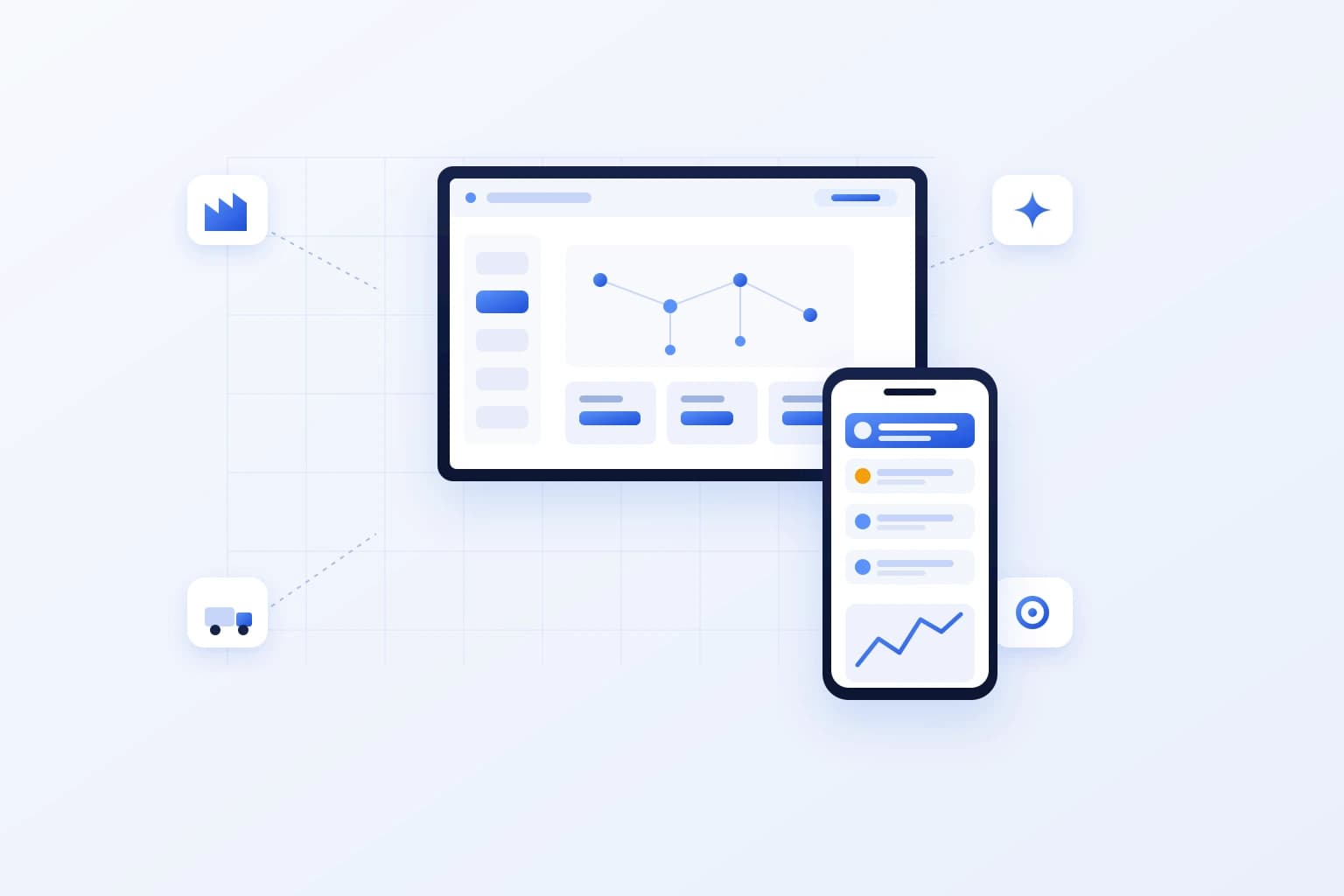
Reference architectures from our Representative Solutions collection that put this guide's ideas into practice.
More guides worth reading
Other guides that go deeper on topics this one touches on.
Database Design for Enterprise Applications: A Practical Engineering Guide
Database design for enterprise applications is the discipline of structuring data models, schemas, and infrastructure so a system stays correct, fast, and maintainable as both the application and the organization grow. It covers relational and non-relational modeling, normalization and denormalization trade-offs, indexing and query performance, and the scaling patterns — partitioning, replication, caching — that keep a database healthy at real production load. Good database design is invisible when done well and expensive to fix when done poorly, which is why it deserves the same engineering rigor as any other part of the system.
Read the guideSaaS Architecture: A Practical Engineering Guide for Enterprise Platforms
SaaS architecture is the set of engineering decisions that let a single codebase and infrastructure serve many customer organizations reliably, securely, and cost-effectively — multi-tenancy strategy, authentication and authorization, billing and subscription systems, and the scalability and security patterns that hold up under real enterprise load. It's not one specific stack or diagram; it's a set of trade-offs a team makes deliberately, based on the product's actual tenant count, compliance requirements, and growth trajectory, rather than copying whatever architecture a well-known SaaS company happens to use.
Read the guideMarketplace Architecture: A Practical Engineering Guide for Two-Sided Platforms
Marketplace architecture is the set of engineering decisions that let a platform connect two distinct sides — buyers and sellers — safely, at scale, and with enough trust that both sides keep coming back. It covers listings, search, and categories as the core product primitives; role-based access for buyers, sellers, and admins; payments and escrow, usually built on something like Stripe Connect; trust and safety mechanisms — reviews, moderation, fraud prevention, dispute resolution; and the scalability and AI patterns that hold up once a marketplace has real transaction volume on both sides. None of this is optional infrastructure bolted on later — trust and payments are the product for a marketplace, not supporting features around it.
Read the guidePurpose-built platforms in this space
Dedicated landing pages for the specific platforms this guide relates to.
Custom Software Development Company
Enterprise systems, CRMs, ERPs, and internal tools tailored to how your operation actually runs.
See the solutionCustom ERP Software Development Company
Custom ERP platforms that centralise operations and connect every department on one scalable system.
See the solutionFor CTOs and technical leadership
Executive-level engagements for organisations planning at a larger scale.
Software Architecture Consulting Services
Scalable, secure, and maintainable software architecture designed to support long-term business growth.
Explore the programLegacy Software Modernization Consulting
A structured engineering approach to modernising legacy software while cutting migration risk.
Explore the programReady to start your project?
Tell us what you're building — we'll tell you honestly whether we're the right fit.
No sales pressure. Just a direct technical conversation.