

Software Architecture Consulting
Design scalable, secure and maintainable software architectures that support long-term business growth and technical excellence.
- Engineering-First
- Scalable Cloud Platforms
- Modern UX
- AI Integration
- Long-Term Maintainability
- Estimated timeline
- Typically 6–10 weeks for an architecture review and roadmap
- Platforms
- System Design · Cloud Architecture · AI Systems
- Tech stack
- React · Next.js · Node.js · PostgreSQL
The business case for deliberate architecture
Architecture decisions made early are the ones a business lives with the longest — and the ones most expensive to reverse once a product is in production. Deliberate architecture isn't an academic exercise; it's the difference between a system that can absorb five years of growth and one that requires a rewrite to survive its own success.
- Scalability
Systems designed to handle real growth in users, data, and traffic, not just the load they were tested against at launch.
- Maintainability
Architecture that a team can actually extend and reason about two years from now, not just ship against this quarter.
- Security
Security treated as an architectural decision from the start, not a layer bolted on after an incident.
- Performance
Systems that stay fast under real production load, not just in a controlled demo environment.
- Business Agility
Architecture that lets the business ship new capability quickly, not one that turns every new feature into a negotiation with the codebase.
- Lower Long-term Costs
Fewer emergency rewrites and less accumulated technical debt, because the architecture was right the first time.
The problems that surface as a system grows
The specific, recurring architectural problems that tend to show up as a product scales past its original design.
Where we work with your engineering team
Engagements scoped to the specific architectural decisions your product actually needs, not a fixed consulting package.
How we review and design software architecture
The same disciplined process behind every architecture engagement, from the first conversation to handover.
- 01Assessment

Understand the current system, its real constraints, and how it actually behaves in production, before any recommendation is made.
- Output:
- A clear, evidence-based picture of the system as it actually is, not as the documentation claims it to be.
- Your team's involvement:
- Providing access to the system, its documentation, and the engineers who actually run it.
- 02Business Goals

Understand the business outcomes the architecture actually needs to support, not just the technical symptoms being reported.
- Output:
- A clear definition of what the architecture needs to achieve, grounded in business priorities.
- Your team's involvement:
- Sharing the real business goals, growth plans, and constraints the architecture has to work within.
- 03Technical Audit
A deep, component-by-component audit of the architecture's real strengths, weaknesses, and risk areas.
- Output:
- A documented audit that identifies exactly where the architecture is likely to break first, and why.
- Your team's involvement:
- Making engineers and system owners available to answer questions the audit surfaces.
- 04Architecture Proposal
Design the target architecture — data model, service boundaries, integration strategy — with trade-offs made explicit.
- Output:
- A concrete architecture proposal, with the reasoning behind every major decision documented.
- Your team's involvement:
- Reviewing the proposal and confirming it aligns with business priorities and constraints.
- 05Implementation Roadmap
Sequence the architectural changes into a roadmap that reduces risk and starts delivering value early.
- Output:
- A phased roadmap that shows exactly what changes, in what order, and why.
- Your team's involvement:
- Agreeing on the roadmap's sequencing and priorities with your engineering leadership.
- 06Knowledge Transfer

Make sure the reasoning behind the architecture is understood by the team that has to live with it, not just documented and handed off.
- Output:
- A team that understands not just what the architecture is, but why it was designed that way.
- Your team's involvement:
- Direct sessions with your engineering team to walk through the architecture and its reasoning.
Architecting for AI, not bolting it on
AI and modern architectural patterns evaluated on engineering merit, integrated into the system's actual design rather than added as a separate layer.
Built on a modern, production-grade stack
Every technology here is a deliberate choice, not a default — selected for the specific architecture it's used in.
Why technical leaders trust Aixo Lab with their architecture
- Engineering-First Mindset
Every architecture engagement starts with a real technical audit, not a predetermined recommendation shaped by what's easiest to sell.
- Vendor-Neutral Recommendations
Architecture decisions made on engineering merit, not steered toward a particular cloud provider or platform because of a partnership.
- Scalable Enterprise Architecture
Real experience designing systems that hold up under enterprise data volume, organisational complexity, and real production demands.
- Long-Term Maintainability
We design for the team that maintains this architecture in two years, including when that's your own in-house engineers — documentation and handover are part of the deliverable.
- Transparent Communication
Direct access to the architects and engineers doing the work, with visible reasoning throughout — not a deck handed off with no context.
- Business-Oriented Engineering
Every architectural decision is made against a real business outcome, not technology adopted for its own sake.
Frequently asked questions
Technologies behind our architecture work
The specific stack choices referenced throughout this page, explained in more technical depth.
Next.js Development
We build enterprise-grade web applications with Next.js, combining the App Router, Server Components, and hybrid rendering to ship products that are fast, scalable, and built to grow.
See the technical detailsNode.js Development
We build enterprise backend systems with Node.js — REST APIs, real-time applications, and event-driven microservices architected for concurrency, scalability, and high availability.
See the technical detailsPostgreSQL Development
We design and operate PostgreSQL databases for enterprise software — schema design, replication, and partitioning architected around the domain's actual data integrity and scale requirements, not a generic reference schema.
See the technical detailsDocker Development
We containerize enterprise software with Docker as a deliberate engineering discipline — image builds, networking, volumes, and secrets designed for a specific production environment, not a development convenience left unchanged at deploy time.
See the technical detailsAWS Cloud Development
We architect and run enterprise software on AWS — high availability, auto scaling, and disaster recovery designed as engineering decisions, not defaults inherited from a template.
See the technical detailsREST API Development
We design and build enterprise REST APIs — resource modeling, authentication, versioning, and rate limiting architected as long-term contracts, not endpoints assembled to make one client work.
See the technical detailsGraphQL Development
We design and build enterprise GraphQL APIs — schema design, federation, and resolver architecture — for the specific cases where GraphQL's tradeoffs genuinely pay off, not as a default replacement for REST.
See the technical detailsServices that pair with software architecture consulting
Architecture engagements rarely stand alone — these are the adjacent engagement types most architecture programmes connect to.
Custom Software Development
We design and build custom business software engineered around your operations, not adapted from off-the-shelf products.
Explore this serviceAI Development
We design and build production-ready AI systems, LLM integrations, AI agents, RAG platforms, workflow automation and intelligent business software.
Explore this serviceBusiness Automation
Automate repetitive processes, connect disconnected systems and eliminate manual work through intelligent workflows, integrations and AI-powered automation.
Explore this serviceWhat this looks like once architected
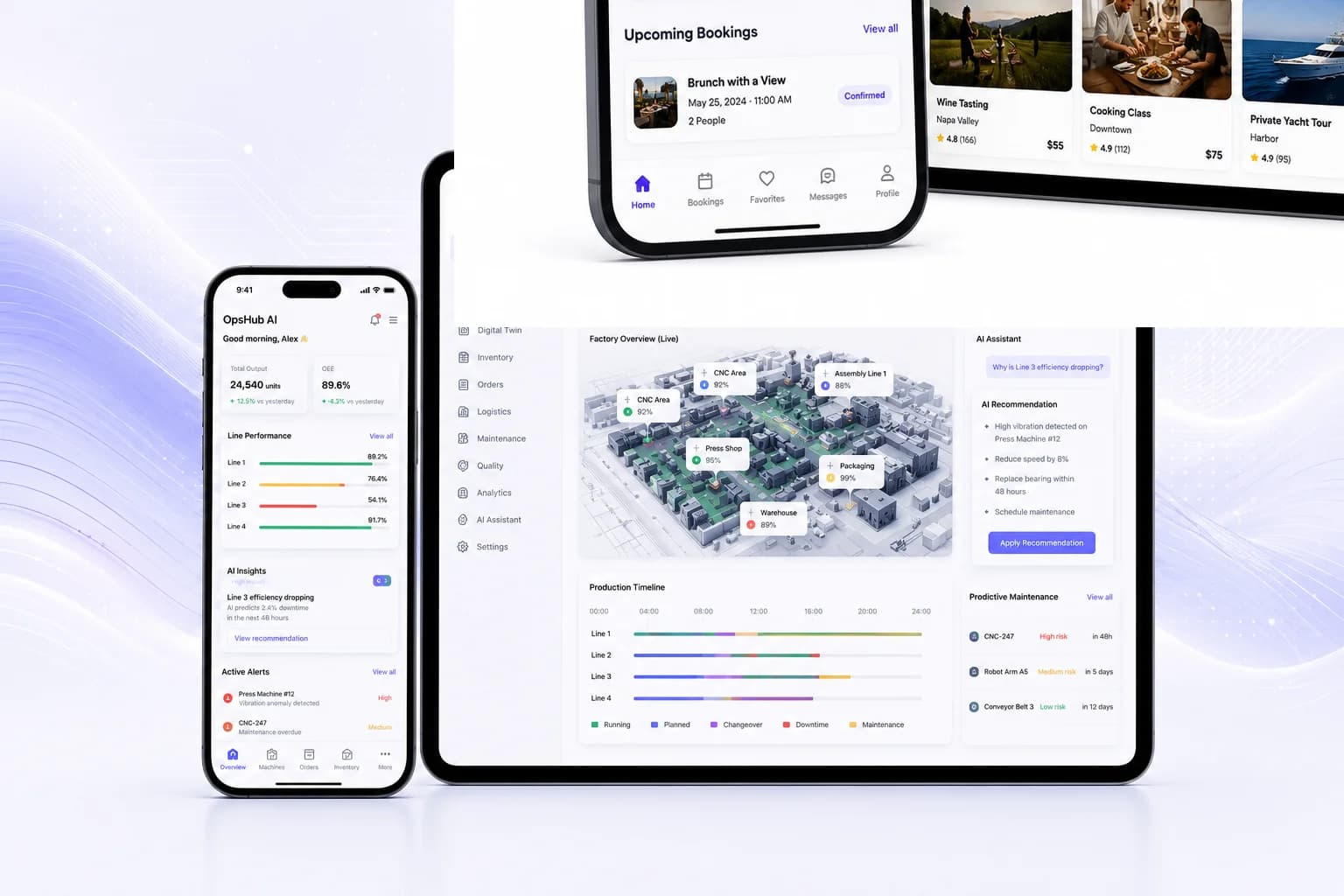
Reference architectures from our Representative Solutions collection that show these ideas in practice.
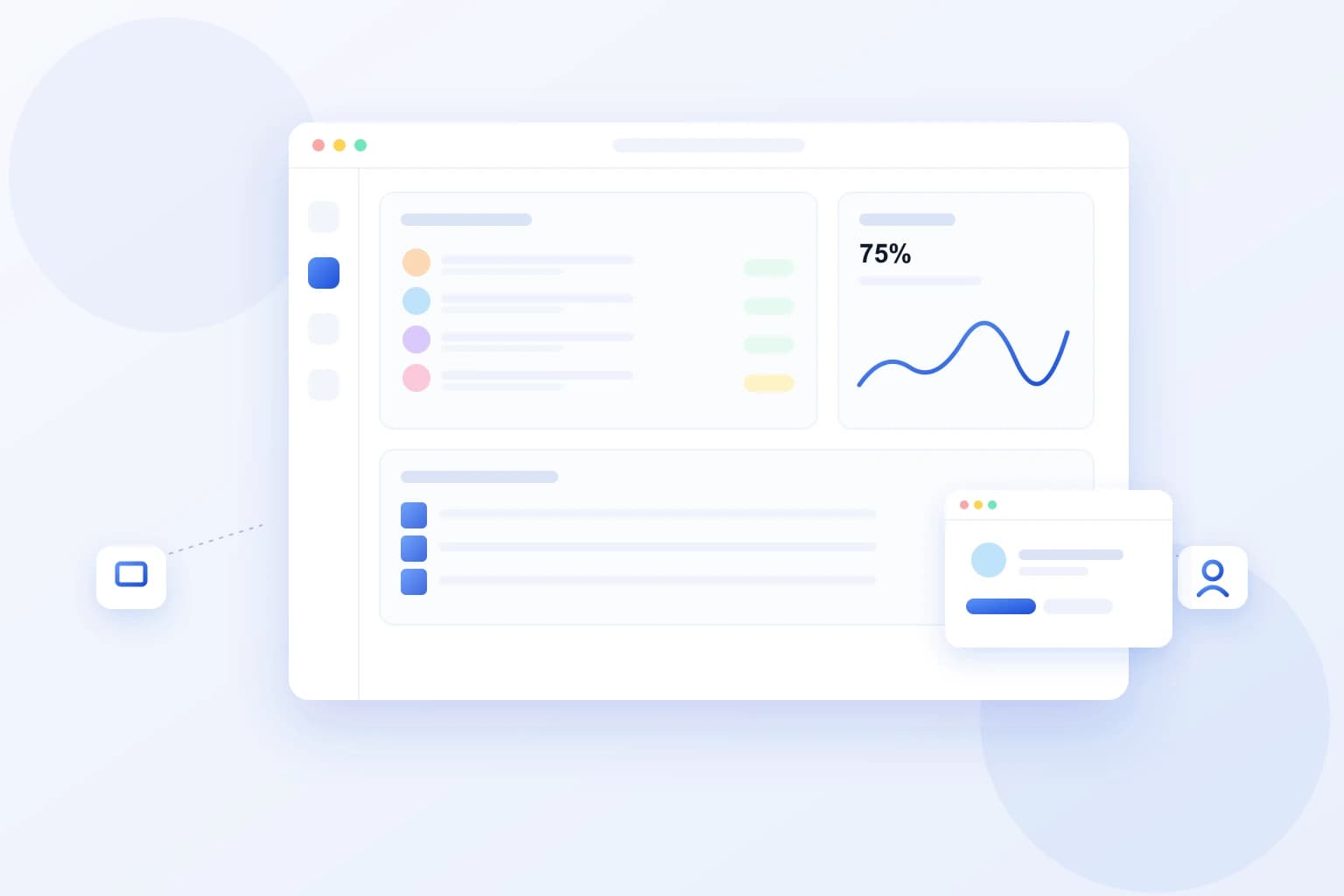
Further reading on enterprise architecture
In-depth engineering guides that go deeper on the specific technical decisions referenced throughout this page.
API-First Architecture for Enterprise Software
API-first architecture means designing and agreeing on an API's contract before writing the implementation behind it, so every client — web, mobile, partner integrations, AI systems — builds against a stable interface instead of whatever the backend happens to expose. This guide explains how that discipline is actually applied in enterprise systems, not the marketing version of the idea.
Read the guideDatabase Design for Enterprise Applications: A Practical Engineering Guide
Database design for enterprise applications is the discipline of structuring data models, schemas, and infrastructure so a system stays correct, fast, and maintainable as both the application and the organization grow. It covers relational and non-relational modeling, normalization and denormalization trade-offs, indexing and query performance, and the scaling patterns — partitioning, replication, caching — that keep a database healthy at real production load. Good database design is invisible when done well and expensive to fix when done poorly, which is why it deserves the same engineering rigor as any other part of the system.
Read the guideSaaS Architecture: A Practical Engineering Guide for Enterprise Platforms
SaaS architecture is the set of engineering decisions that let a single codebase and infrastructure serve many customer organizations reliably, securely, and cost-effectively — multi-tenancy strategy, authentication and authorization, billing and subscription systems, and the scalability and security patterns that hold up under real enterprise load. It's not one specific stack or diagram; it's a set of trade-offs a team makes deliberately, based on the product's actual tenant count, compliance requirements, and growth trajectory, rather than copying whatever architecture a well-known SaaS company happens to use.
Read the guidePlatforms engineered on the architecture principles above
The commercial systems where getting the architecture right matters most — complex, long-lived platforms built to scale.
Custom Cloud-Native SaaS Development Company
Cloud-native, multi-tenant SaaS platforms engineered for growth, security, and long-term maintainability.
See the solutionCustom Software Development Company
Enterprise systems, CRMs, ERPs, and internal tools tailored to how your operation actually runs.
See the solutionB2B & B2C Marketplace Development Company
Scalable B2B, B2C, and multi-vendor marketplace platforms engineered for growth and security.
See the solutionOther ways we work with enterprise leadership
Architecture decisions rarely stand alone — see how this engagement connects to the other consulting work we do.
Digital Transformation Consulting Services
Helping enterprise leaders modernise legacy systems and build digital products through disciplined engineering.
Explore the engagementLegacy Software Modernization Consulting
A structured engineering approach to modernising legacy software while cutting migration risk.
Explore the engagementAI Strategy Consulting for Enterprise Leaders
Helping organisations identify, prioritise, and implement AI initiatives that generate measurable value.
Explore the engagementReady to discuss your architecture?
Tell us about your system and where it's headed — we'll tell you honestly what it would take to architect it properly.
No sales pressure. Just a direct engineering conversation.